

working ends of curettes form a spoon-shaped face and a rounded back. In a cross-section, the curette blade appears semicircular rather than triangular (shape of the sickle scaler). Two basic types of curettes are the universal and the area specific.
- The universal curette is a paired instrument designed to adapt to most areas of the dentition by altering and adapting the finger rest, fulcrum, and hand position. Two parallel cutting edges are formed, one on either side of the face. Either cutting edge can be used. Universal instruments come in a variety of sizes and shank lengths. Some commonly used instruments are the Columbia #13/14 and the McCalls #13/14 and #17/18. The Columbia #13/14 has a true universal application, whereas the McCalls has two cutting edges on each blade that are better suited to certain areas of the mouth. The McCalls #13/14 are best suited for use on bicuspids and the #17/18 for molars (fig. 6-9).
- Area specific curettes differ from the universal curettes in several ways. First, they are a set of several instruments designed and angled to adapt to a specific anatomic area of the dentition. Second, these curettes are designed with only one cutting edge. Area specific curettes are the best choice for subgingival scaling and root planing because they provide the best adaptation to the complex root anatomy.
The Gracey curettes are paired, area-specific instruments, that have similar blades with different angulations and contra-angulations of the shank. Figure 6-10 illustrates the complete set of double-ended Graceys. Next we will discuss where each Gracey is used on the tooth surface being scaled
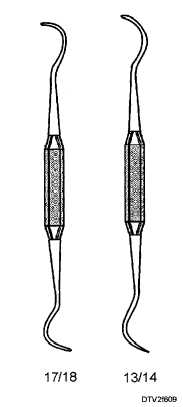
Figure 6-9. - McCalls curettes. or root planed.
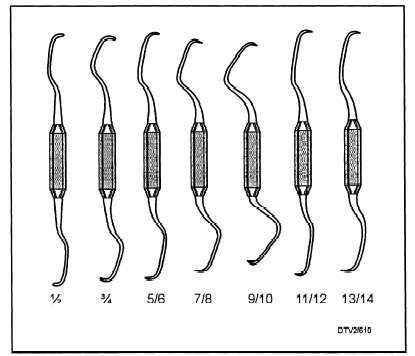
Figure 6-10. - Gracey area specific curette set.
Continue Reading